Minimalist Lapel-Collar Down Coat with Faux-Leather Trim
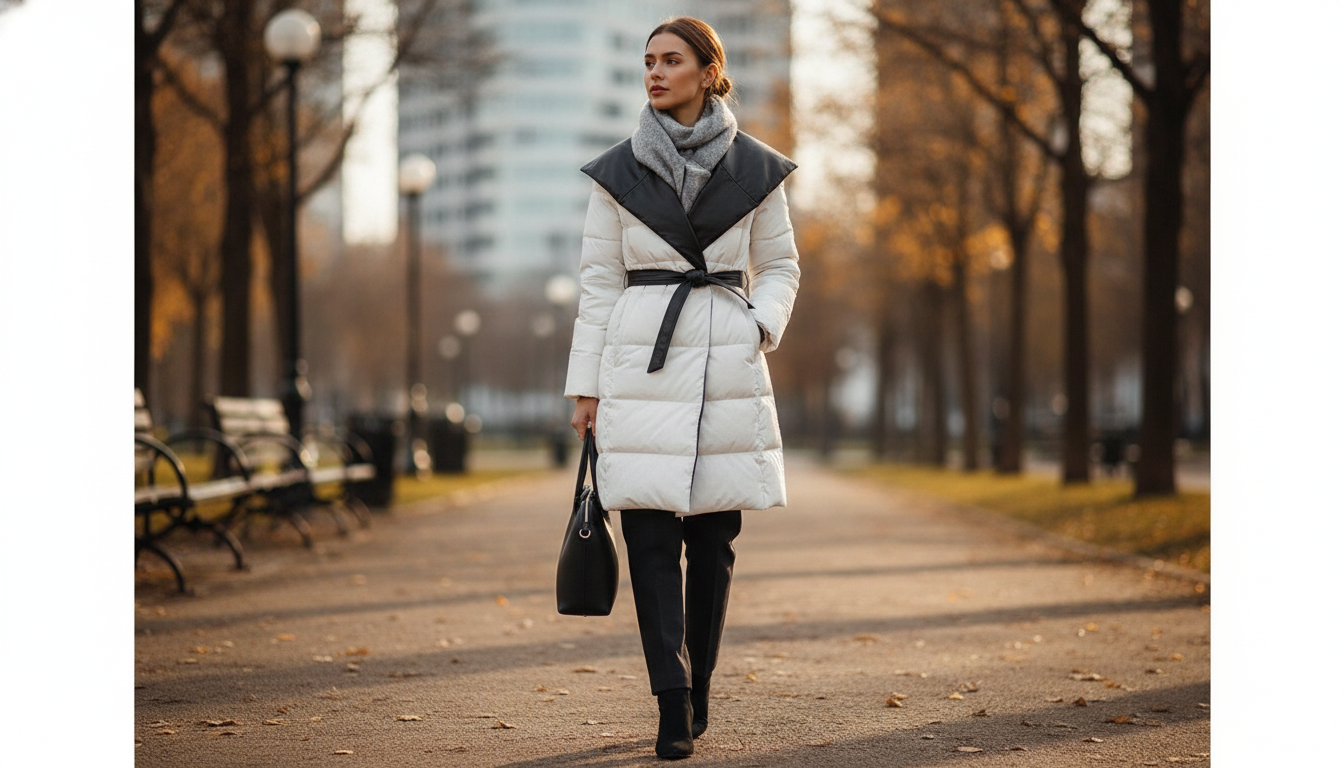
Minimalist Women’s Winter Down Coat with Lapel Collar and Imitation Leather
Clean lines, a structured lapel collar, and a down-insulated build make this coat a polished option for cold-weather dressing. The imitation-leather detailing adds contrast and durability where winter tends to be toughest on outerwear—without losing a minimalist feel. If a wardrobe leans toward versatile staples that look intentional (rather than overly sporty), a streamlined down coat like this can quickly become the piece that pulls everything together.
What Sets the Look Apart
A minimalist silhouette does more than look sleek—it makes winter layering simpler. Instead of fighting with bulky proportions, this style is designed to slip comfortably over sweaters while still reading clean and structured.
- Easy layering, less bulk: A pared-back shape helps avoid the “overstuffed” look when you add knitwear underneath.
- Lapel collar polish: The lapel frames the face and pairs naturally with scarves, turtlenecks, and even statement earrings when the rest of the outfit is understated.
- Imitation-leather accents: Synthetic leather can add a refined, city-ready finish and is often simpler to wipe clean in high-contact areas (like trim and panels) than textured fabric.
- Capsule-wardrobe friendly: One streamlined winter coat can bridge workdays, weekends, and travel without needing separate “dressy” and “casual” outerwear.
For a closer look at the style and current availability, see the Minimalist Women’s Winter Down Coat with Lapel Collar and Imitation Leather.
Warmth and Weather Practicality
Down is prized for warmth-to-weight: it can feel insulating without the heavy, stiff sensation that sometimes comes with thick winter layers. That comfort matters on long commutes, travel days, or when temperatures swing between outdoors and overheated interiors.
- Warm without feeling weighed down: Down insulation traps air, helping create warmth while keeping the coat wearable for daily movement.
- Wind management: A secure front closure and a collar that sits neatly (and can be turned up) make a noticeable difference on gusty days.
- Light moisture strategy: In wet snow or drizzle, a water-resistant outer fabric helps. If moisture builds up, blot gently and air-dry promptly rather than applying direct heat.
- Cold-climate approach: In very cold areas, it’s usually better to add thermal base layers and insulated accessories than to size up dramatically (which can throw off the clean drape and allow drafts).
Materials: Down Fill and Imitation Leather
The warmth and “feel” of a down coat depend on more than just the word “down.” Loft (how much the down fluffs up) and distribution (how evenly it’s spread through the coat) influence how consistent the insulation feels across the body.
- Down fill basics: Down insulates by trapping air; even baffles help prevent chilly thin spots.
- Why imitation leather helps: Synthetic leather can add structure and abrasion resistance around trims and panels—areas that often rub against bags, seatbelts, and cuffs.
- Comfort checkpoints: Pay attention to the lining feel at the neck and cuffs, and whether the lapel lies smoothly without rubbing.
- Personal preferences: If sensitivity to animal-derived materials is a concern, confirm whether the coat’s components align with your preferences and care needs. For background on responsible down initiatives, see Textile Exchange’s overview of the Responsible Down Standard (RDS).
Quick Guide to Evaluating a Minimalist Winter Down Coat
| Feature | What to look for | Why it matters |
|---|---|---|
| Collar shape | Lapel that lays flat and can flip up without collapsing | Improves wind coverage and keeps the neckline looking crisp |
| Down distribution | Even baffles with no thin spots | Reduces cold patches and keeps insulation consistent |
| Outer finish | Tight weave or treated fabric; seams that look clean | Helps resist abrasion and light moisture while staying sleek |
| Imitation-leather trim | Smooth, flexible panels with neat stitching | Adds structure and can be easier to spot-clean |
| Length and hem | Coverage that matches climate and commute | Longer hems boost warmth; shorter hems increase mobility |
Fit, Sizing, and Layering
A minimalist coat looks best when it drapes cleanly—neat at the shoulders, smooth at the back, and comfortable at the closure. The goal is room to layer without strain.
Care labeling can vary by garment construction and materials, so follow the specific instructions on the tag. The FTC’s overview of the Care Labeling Rule is a helpful reference for understanding what labels communicate.
Styling Ideas for a Minimal Capsule Wardrobe
If a streamlined shoe option fits the same low-fuss aesthetic, consider pairing winter outfits with Guess Women’s Leather Slip-On Shoes for an easy, polished finish on milder days or indoor-heavy schedules.
Care and Longevity
When This Coat Makes the Most Sense
FAQ
Is a lapel-collar down coat warm enough for freezing temperatures?
It can be, but warmth depends on the amount and distribution of insulation, the coat’s length, and how well it blocks wind at the front closure and neckline. In freezing conditions, pair it with thermal base layers, a scarf, and insulated gloves rather than relying on extra-sizing alone.
How should imitation leather on a winter coat be cleaned?
Use a soft, damp cloth to wipe the surface and let it dry naturally away from direct heat. Avoid harsh chemicals or solvents, and always confirm the best method on the garment’s care label.
How should a minimalist down coat fit over sweaters?
The shoulders should sit in the right place, sleeves should be long enough to overlap gloves, and there should be room for a midweight knit without pulling at the closure. If thick sweaters are a regular part of the rotation, sizing up slightly can help while still keeping a clean drape.















Leave a comment