Smart Air Purifier for 2690 sq ft: PM2.5 Auto Clean
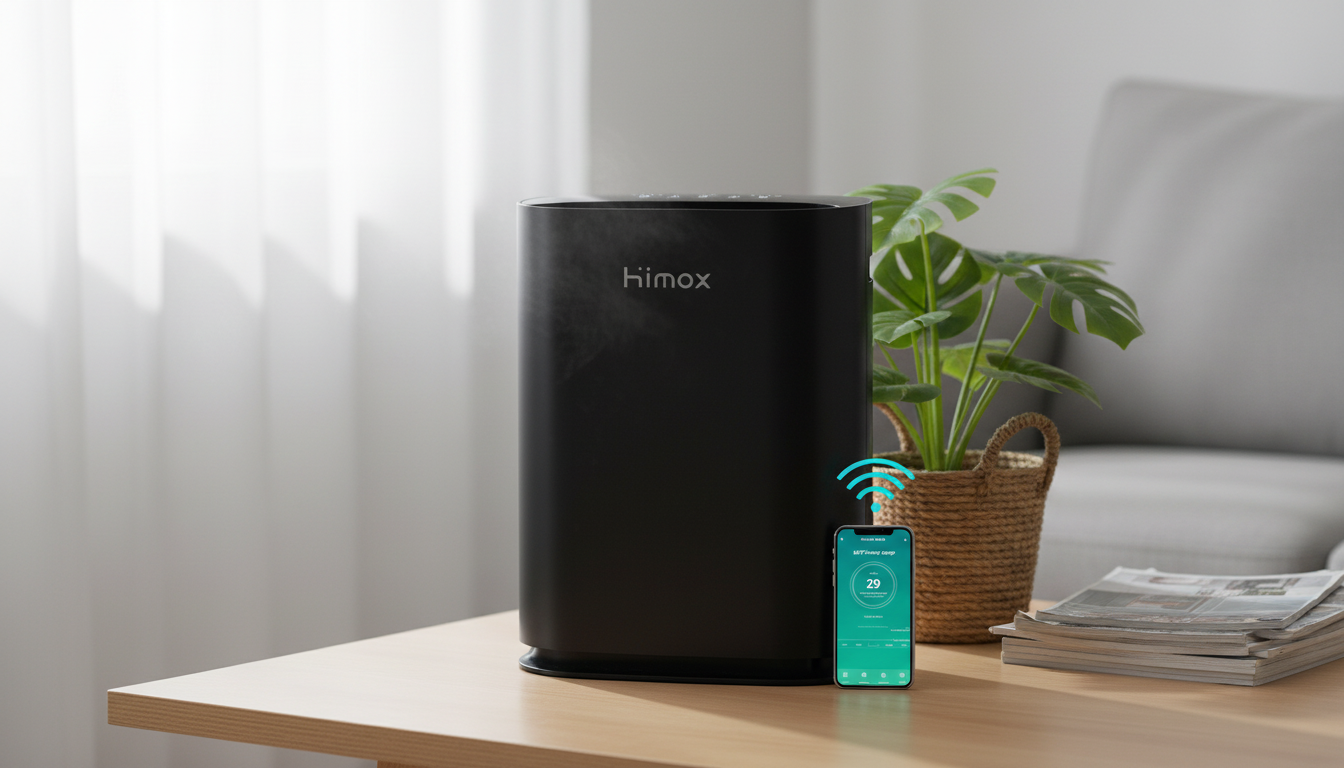
Smart Air Purifier Performance for Extra-Large Rooms (Up to 2690 sq ft)
Large, open-concept spaces and multi-room areas need more than basic filtration—they need fast air turnover, responsive automation, and clear feedback on what’s happening in the air. A smart air purifier sized for very large rooms with a PM2.5 monitor helps track particle levels in real time and adjusts performance to match changing conditions like cooking, pets, wildfire smoke, and seasonal allergens.
When you can see particulate readings and let the unit respond automatically, it’s easier to keep air consistently cleaner without running the fan at full speed all day.
Who This Large-Room Purifier Fits Best
- Open living rooms, basements, lofts, and combined kitchen–living areas where air circulates across a wide footprint
- Homes with pets or frequent cooking where fine particles can spike quickly
- Allergy-sensitive households that benefit from automated fan adjustments based on measured PM2.5
- Users who want at-a-glance air quality information instead of guessing when to increase fan speed
What the PM2.5 Monitor Tells You
PM2.5 refers to fine particles 2.5 microns or smaller. These tiny particles can come from smoke, traffic pollution, cooking aerosols, and dust—and because they’re so small, they can hang in the air longer and travel farther through an open layout.
- Real-time PM2.5 monitoring helps confirm whether the purifier is reducing particle loads after events like frying food or vacuuming.
- Auto mode can use sensor readings to ramp up quickly during spikes and settle down when air clears, balancing cleaning performance and noise.
- Monitoring is also useful for filter planning: persistent higher readings may indicate filters need replacement, windows are leaking outdoor pollution, or the unit is undersized for the space.
For deeper guidance on what air cleaners can (and can’t) do in homes, the U.S. Environmental Protection Agency (EPA) guide to air cleaners is a helpful reference.
Coverage and Air Cleaning Speed for Very Large Areas
A very large coverage rating is most valuable when air can actually move across the entire space. Open floor plans, lofts, and finished basements tend to benefit the most, while closed doors, tall furniture, and tight hallway turns can reduce how far cleaned air travels.
- A very large coverage rating works best when airflow isn’t blocked by walls, closed doors, or bulky furniture.
- For multi-room layouts, performance improves when interior doors stay open and the purifier is placed where air naturally circulates.
- Faster cleaning depends on both airflow volume and how quickly the unit detects increases in particulates.
- Match settings to real conditions: smoke events, cleaning days, and high-traffic evenings often require higher output.
When comparing purifiers, CADR ratings are commonly referenced. The AHAM explanation of CADR ratings clarifies how clean air delivery relates to room size and particle types.
Large-room setup checklist
| Goal | Practical step | Why it helps |
|---|---|---|
| Improve overall circulation | Place the purifier near the center of the open area or along a main airflow path | Helps distribute cleaned air farther and reduces stagnant zones |
| Reduce sensor confusion | Keep it away from direct drafts (HVAC vents) and very close-range sources (directly beside a stove) | Avoids false spikes or under-reading due to turbulent air |
| Lower particle hotspots | Position closer to known sources (pets, litter area, entryway) when feasible | Catches particles nearer to where they originate |
| Support multi-room areas | Keep interior doors open when possible; consider one unit per floor for homes with stairwells | Walls and closed doors limit how far cleaned air can travel |
Smart Controls and Automation That Matter Day to Day
In a large room, manual fan changes can feel like a constant chore—especially if air quality changes quickly throughout the day. Smart controls make a noticeable difference when they’re tied to sensor feedback rather than simple timers.
- Auto mode tied to PM readings can deliver hands-off operation during cooking, cleaning, or seasonal smoke.
- A clear on-unit display or app view of air quality trends helps verify improvements over time (and spot recurring spikes).
- Scheduling can prioritize higher cleaning during peak activity hours and quieter operation overnight.
- If available, child lock and display-off options can make bedroom use more comfortable.
Noise, Placement, and Comfort in Large Spaces
Filters, Maintenance, and Operating Costs
Featured Option for Extra-Large Coverage
Product quick look
| Product | Coverage claim | Air quality monitoring | Link |
|---|---|---|---|
| Smart Air Purifier for Large Rooms up to 2690 sq ft with PM2.5 Monitor | Up to 2690 sq ft | PM2.5 monitor | View product |
If you want a single, high-capacity unit designed to cover a wide footprint and adjust automatically based on particle levels, consider the Smart Air Purifier for Large Rooms up to 2690 sq ft with PM2.5 Monitor.
More In-Stock Picks
FAQ
Does a PM2.5 monitor measure odors or gases?
No. A PM2.5 sensor is designed to track fine particles like smoke, dust, and cooking aerosols, not odors or gases (VOCs). If odors are a main concern, look for filtration features specifically intended for gases.
Where should a large-room air purifier be placed for the best results?
Place it where air moves through the space—often near the center of the open area or along a main traffic/airflow path—with clear space around the air inlets and outlets. Avoid tight corners and direct HVAC drafts, and remember closed doors can limit how well one unit serves multiple rooms.
How often do filters need to be replaced in a high-capacity air purifier?
It depends on air quality, pets, smoke exposure, and how many hours the purifier runs (especially at higher speeds). Follow the manufacturer’s guidance and replace sooner if performance drops or the monitor shows persistently higher readings.










Leave a comment